| Why nView TSO?
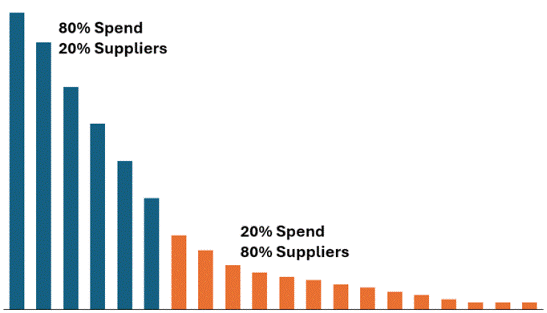
Tails spend in a simple pareto is the 80% of suppliers that make up 20% of the overall spend
with a businesses supply base.
Conversely strategic spend (or suppliers) are the 20% (or less) that make up 80% of the
overall spend with a businesses supply base.
|
Naturally procurement professionals go after the strategic spend to structure deals for best value.
As a results Tail Spend often goes un-watched and un-addressed
falling in a
“too hard” or
“too much time” required for
“little value returned” bucket.
|
|
Organisations often that the following approaches to address Tail Spend;
|
|
They try using cost plus buyer advocates…
This will often just adds margin and inflates cost with little transparency.
They try to put everything onto a contract…
It’s often not practical do this, too much admin, too variable, too many one offs.
|
|
They require the business operations to “get 3 quotes”…
Busy operations staff seek path of least resistance to
get what they need to do their job and as a result the
quotes are often not true market tests or independent.
They try to have high cost procurement resources address it…
Payback exceeds the cost and they often have a
negative ROI result.
nView TSO avoids the usual pitfalls with a proven cost effective system that can be rapidly
deployed in your business Signup for nView Tail Spend Optimisation Diagnostic
Read about what nView TSO Offers
|

|
|